
Racial Justice
Facing Racism + Reparations
“Injustice anywhere is a threat to justice everywhere.” Dr. MLK Jr, Letter from a Birmingham Jail
We are committed to addressing systemic economic inequalities and empowering Black Beloveds. The Racial & Economic Justice team is leading in the organization’s love-based revolution toward ending anti-Black racism and white supremacy, including the development of the curriculum and facilitation of racial justice programming with both virtual and in-person workshops and cohorts.
Our racial and economic justice programming empowers communities to dismantle systemic inequalities and build a more equitable world. We are dedicated to amplifying Black liberation by championing transformative policies and initiatives that address the unique challenges faced by Black communities through grassroots activism, community-driven economic development, and equitable access to resources to ensure that every individual has the opportunity to thrive.
Facing Racism
Facing Racism is an educational experience using a cohort model, led by Black beloveds toward ending anti-Black racism and ending white supremacy culture while centering Black experiences toward the liberation of all.
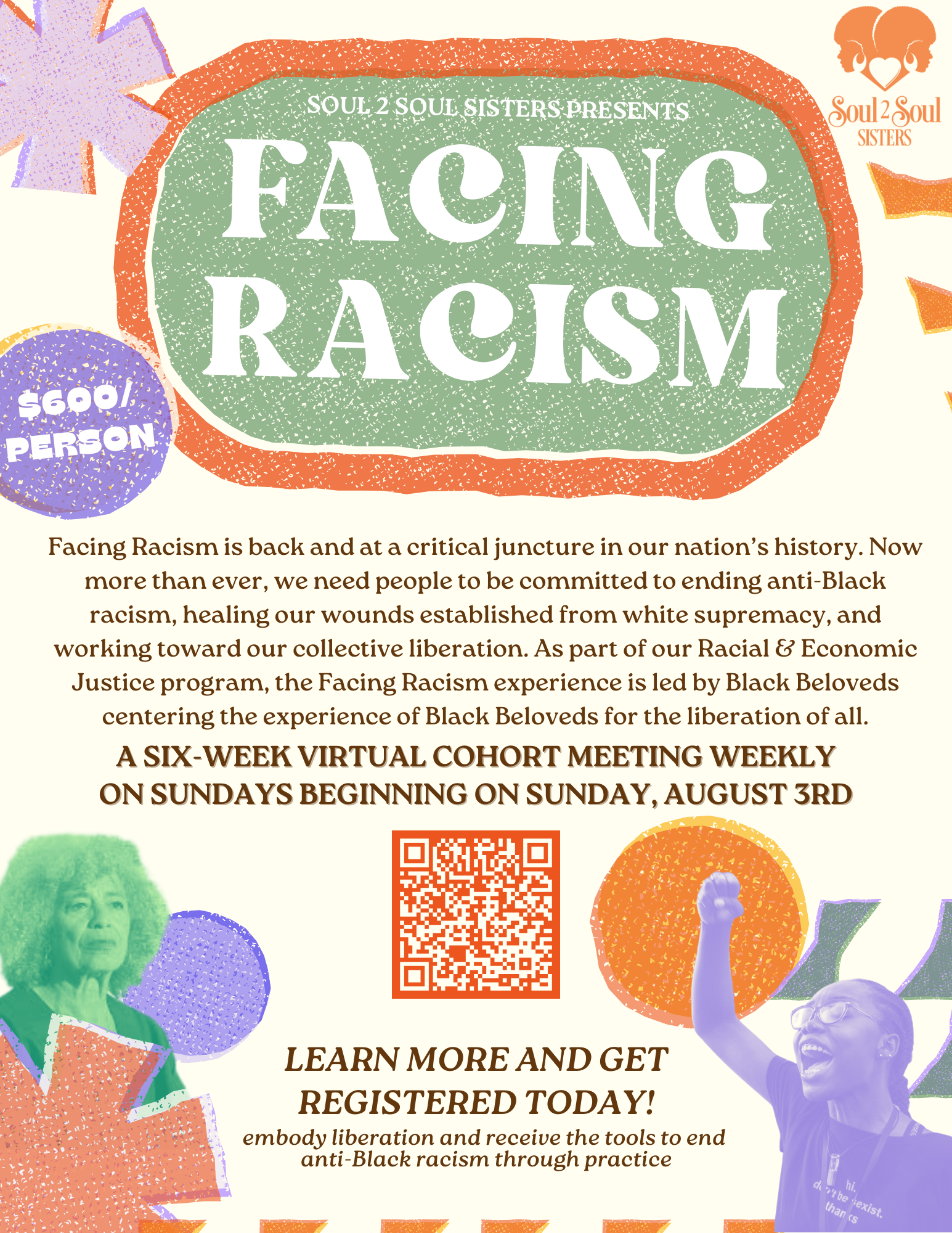
Facing Racism is back and at a critical juncture in our nation’s history. Now more than ever, we need ALL people to be committed to ending anti-Black racism, healing our wounds established from white supremacy, and working toward our collective liberation. As part of our Racial & Economic Justice program, the Facing Racism experience is led by Black Beloveds centering the experience of Black Beloveds for the liberation of all.
REGISTER HERE for our upcoming Facing Racism Cohort starting Sunday, August 3rd!
Meet the Instructors
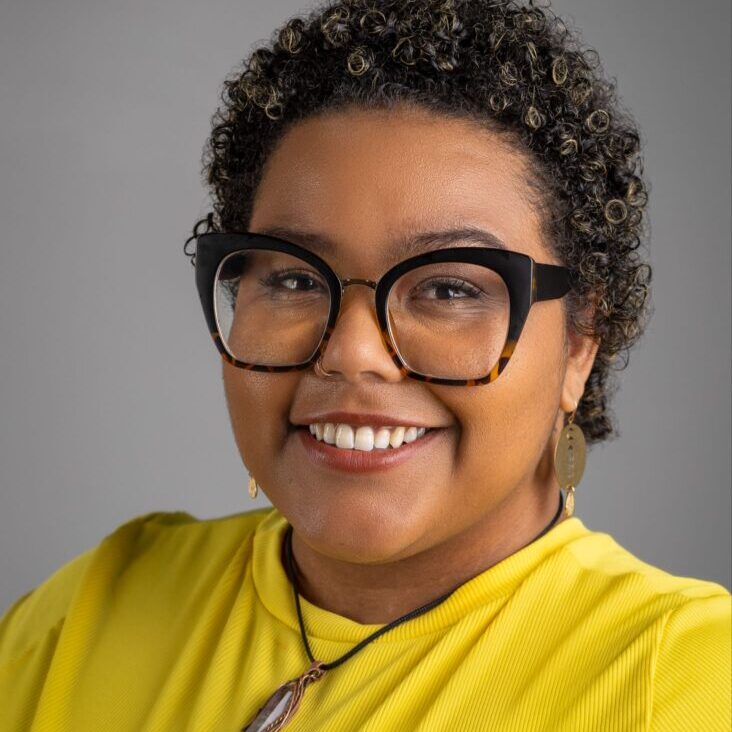
Courtney Anika (she/they) is an experienced justice-centered leader who diligently works to create equitable solutions for organizations that center the experiences of Black and Queer people and thrives in all things administrative and behind the scenes. Courtney Anika is deeply committed to deprogramming their personal socialization as well as decolonizing the systems they [we] exist in through honoring and embracing the fullness of herself and the reflection of that in others which is upheld by Soul 2 Soul Sisters love-based revolution. While she continues to work on decolonizing her own programming, part of their trajectory and the tools that she utilizes in their work come from receiving an Associate of Arts degree in Communication Studies, a Bachelor of Arts degree in Youth Ministry, as well as a Master of Arts degree in Organizational Leadership. Courtney Anika utilizes her strengths to uplift the experiences of Black Beloveds, shine truth to the injustices that are faced with a white supremacist system, and provide tools to dismantle those systems and build toward a communal, restorative, and liberative world.
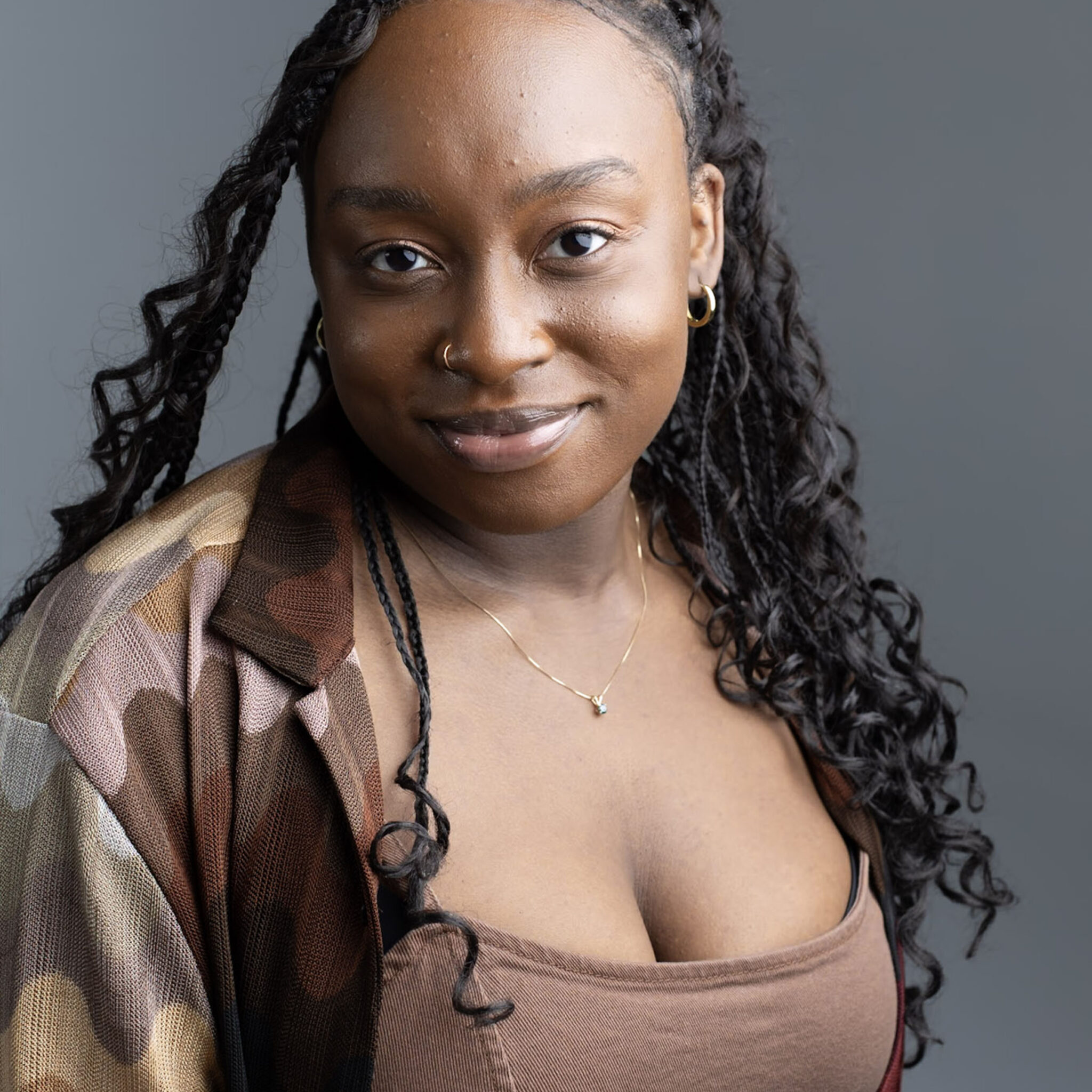
Desteni Rivers (she/her), is a Black, queer Southern woman from Tennessee, who draws inspiration from her upbringing filled with love and support amidst pervasive barriers faced by Black beloveds. Her journey is driven by a desire for positive change on both individual and systemic levels. With a Bachelor of Arts in Gender, Sexuality, and Women's Studies, along with minors in Africana Studies and Law & Society from the University of Pennsylvania, she built a strong foundation in racial and reproductive justice. Leveraging this knowledge, Desteni has supported grassroots BIPOC and Women-led nonprofits as a grant writer and consultant, including Soul 2 Soul Sisters since 2020. At S2SS, Desteni found a home within the organization working at the intersection of Reproductive and Racial Justice. Upon joining the team full-time as the organization's Racial and Economic Justice Manager leads S2SS in developing and implementing racial justice programming such as Facing Racism and Reparations programming that ensure organizational financial sustainability and embody economic justice.
Reflections from Recent Facing Racism Participants
“Four sessions laid a solid foundation—and I wish they hadn’t ended! Thank you for the heart, compassion, time, resources, and vulnerability you brought to class. Your amazing facilitation made this experience truly special, and I appreciate every bit of effort. I’ll miss it, but I’m excited to continue this work individually. Thank you <3. This was the only space where I felt truly comfortable without oversharing to white counterparts—you really had them doing the work, and don’t think I didn’t notice.” Facing Racism Participant, 2024 Fall Cohort
“I was able to be vulnerable—especially in my small group and through journal/discussion prompts. I admitted implicit biases and reactions to the shared resources, something I rarely discuss, and confronted the harm I’ve caused in the past. It was invaluable to have a workshop dedicated to honest, vulnerable, and compassionate dialogue while directly addressing the harm we as white people have caused. I felt validated in my vulnerability and appreciated that both participants and facilitators shared it openly.” Facing Racism Participant, 2024 Fall Cohort
Reparations
Reparations: Soul 2 Soul Sisters advances the Reparations movement by providing comprehensive Reparations programming to foster awareness, understanding, and support. We distribute and uplift educational tools and resources; facilitate platforms for reparationists; and build a coalition of supporters that provide mutual aid and programmatic assistance for Black Beloveds NOW.
The Case for Reparations
The United States has demonstrated capacity and desire to participate in reparations through efforts towards our Native Americans and Japanese siblings. Black Beloveds have yet to receive any form of redress for centuries of violence inflicted upon them during American chattel slavery and its vestiges, such as Jim Crow laws, redlining, hyper-criminalization, and education inequality and social, economic, and political exclusion. These injustices have created a significant wealth and health gap, directly impacting our well-being and hindering our ability to achieve Reproductive Justice for descendants of enslaved Africans in America.
- 1 in 4 Black households in the U.S. either had no wealth or were in debt in 2021 (Pew Research, Wealth Surged in the Pandemic, but Debt Endures for Poorer Black and Hispanic Families).
- In 2021, the typical White household had 9.2 times as much wealth as the typical Black household – $250,400 vs. $27,100 (Pew Research, Wealth Surged in the Pandemic, but Debt Endures for Poorer Black and Hispanic Families).
- According to a new JAMA Network Open study, the difference in economic and social resources between white and Black families has been linked to health inequality. Black study participants had a 4 year shorter life expectancy than their White counterparts. Similar disparities were found in terms of wealth and income. (The Wealth and Health Gap Between Black and White Americans: Reparation Payments May Narrow Racial Disparities, The Leonard Davis Institute of Health Economics)
Soul 2 Soul Sister’s OurStory program produced the three-part, “Reparations Right NOW” video series to help raise awareness, cultivate healing, honor human dignity, and respect Black Women's expertise relating to Black Women’s demands for reparations.
Here’s the synopsis: 5 Black Women and youth share their experiences navigating COVID-19, its impact on Black communities, and subsequent uprisings spurred by the murder of George Floyd. Through candid conversation, the film traces a timeline of the United States of America’s multigenerational reality of slavery and the historic and present-day, long-standing results while also evoking opportunities for deeper dialogue, action, healing, and liberation for all.
Our Offerings
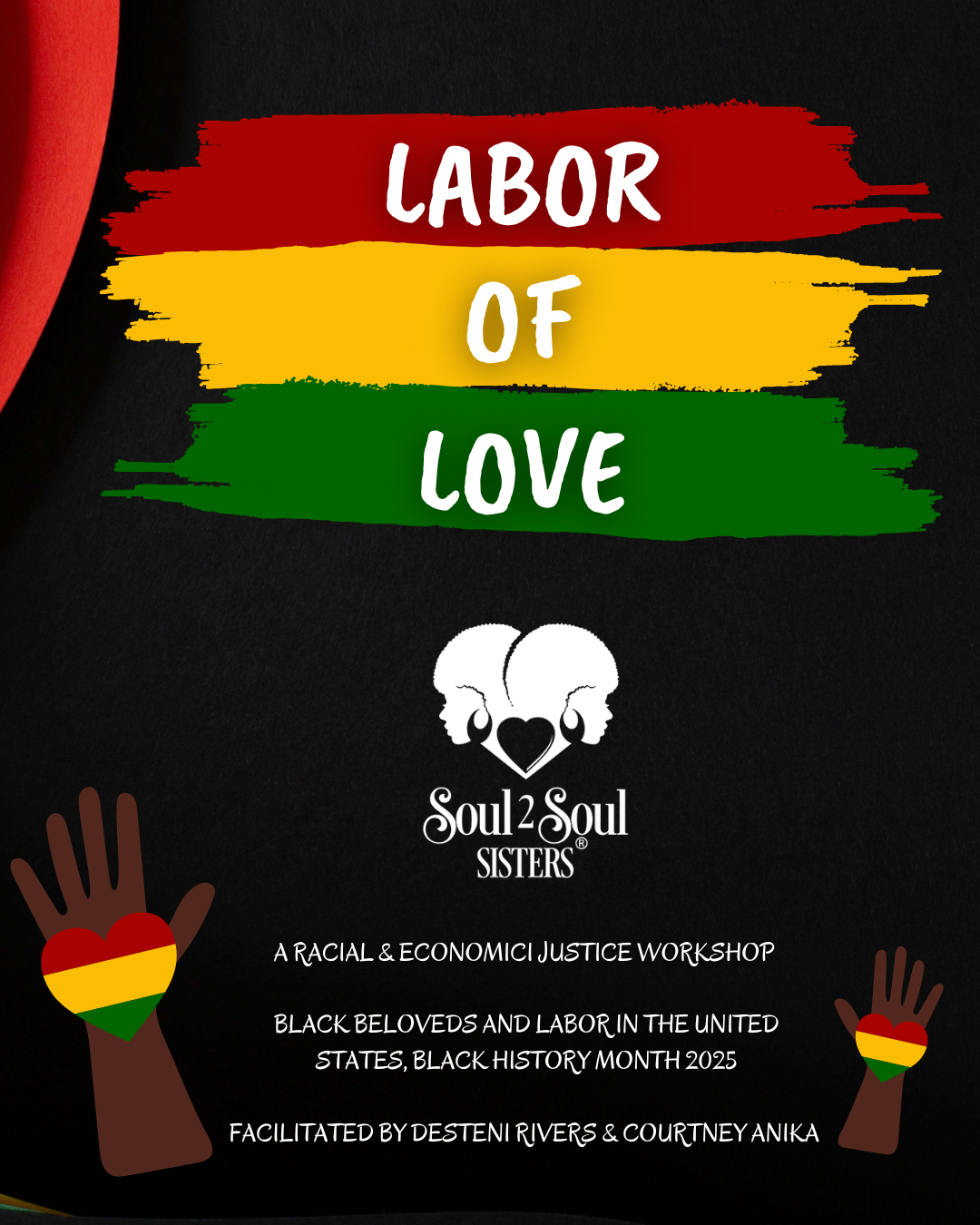

Past Workshops
Interested in hosting a Facing Racism workshop for your peers? Contact info@soul2soulsisters.org
The Grass is Greener on the Other Side: Understanding the History of Obstetric Racism on the Current Care of Black Families. This workshop raised awareness about obstetrical racism to facilitate a change in beliefs, attitudes, and behaviors among doulas and other healthcare providers alike.
Unshackled: perspectives & practices for healing intergenerational racialized trauma. This interactive session focused on exploring, identifying and attending to the impacts of the legacy of racialized violence and oppression within our families and lineage and practices we can prioritize to cultivate intergenerational healing.
We’ll Lift as We Climb: Empowering Black Women’s Voices in the Workplace - The UnL3@rning Series for BIPOC Educators & Leaders. In this workshop, participants explored workplace dynamics and delved into the impact of anti-Blackness and gender bias. This workshop also discussed practical strategies for fostering allyship and supporting the development and amplification of the voices of Black women colleagues and leaders.
Fortifying Pathways Towards Reparations and Repair. We dived into the history, understanding and current state of the reparations movement, while discussing ways to support and advocate to fortify the movement.